The ABIDE Framework

The ABIDE Framework

The ABIDE acronym stands for Accessibility, Belonging, Inclusion, Diversity, and Equity — an interconnected, action-oriented blueprint that shifts organizations from passive compliance to active transformation.

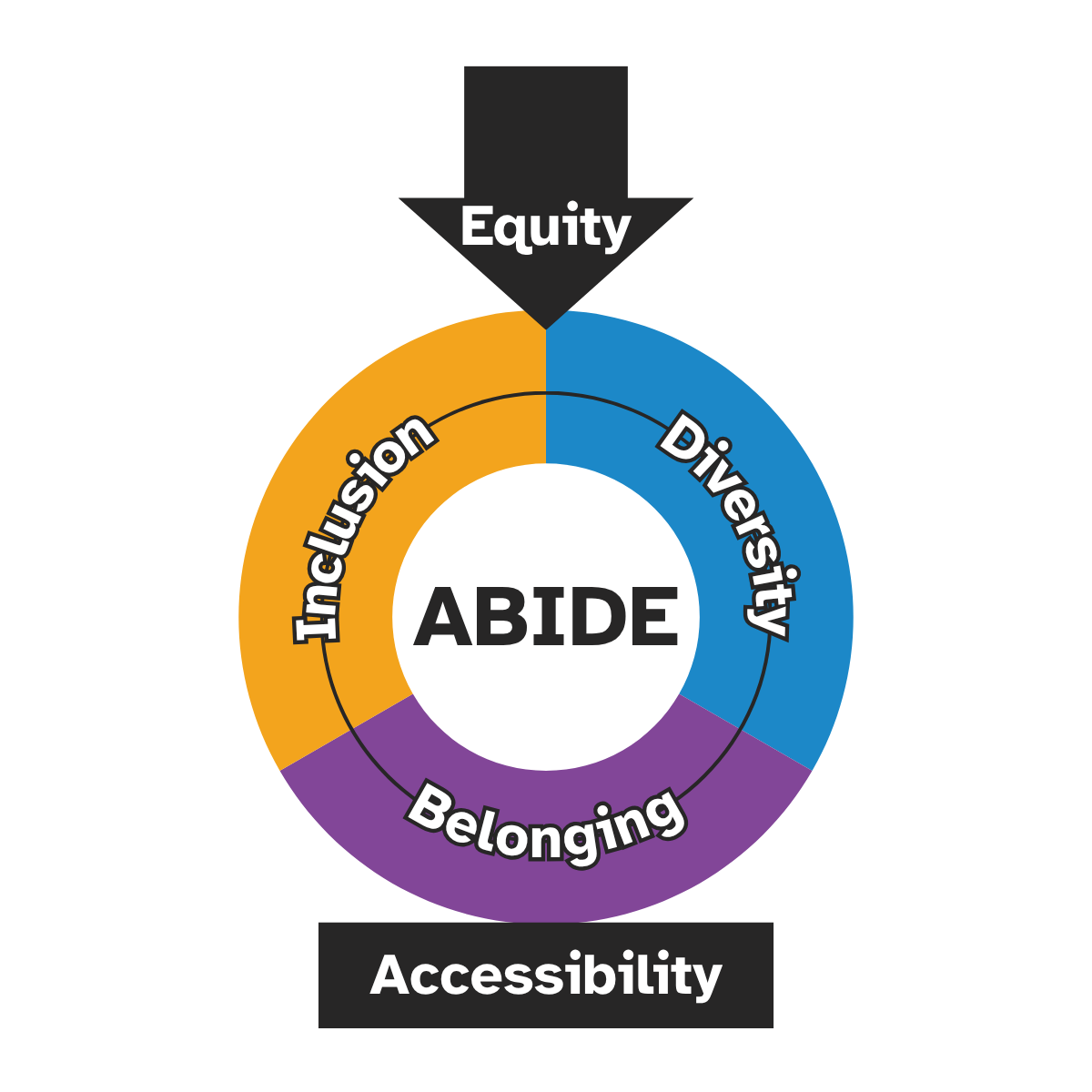
The ABIDE framework model: a ring made of Inclusion (orange), Diversity (blue), and Belonging (purple) segments, with an Equity arrow flowing into the ring from above and an Accessibility foundation bar below
The ABIDE model — Accessibility is the foundation, Equity is the thread running through

Another acronym?

We live in a world saturated with frameworks. Organizations love an acronym, rolling out initiatives that sound great in a mission statement but later fade into corporate wallpaper. Traditional models like DEI (Diversity, Equity, and Inclusion) have laid important groundwork, but often struggle with execution or have been shrouded in political divisiveness.

That is why the ABIDE framework was built. More than just five letters, ABIDE is an interconnected, action-oriented blueprint with a deliberate structural choice: it begins with Accessibility and carries Equity through every single layer.

Without accessibility, the rest falls apart

  • You can't invite Diversity into a room if the entrance isn't accessible.
  • You can't foster Inclusion if tools and platforms exclude disabled users.
  • You can't build Belonging if people are constantly reminded the space wasn't made for them.
  • You can't achieve Equity without first eliminating structural barriers to entry.

What does ABIDE stand for?

Each letter of the ABIDE acronym is a layer of one sustainable ecosystem. Definitions come from The ABIDE Dictionary by Britne Jenke.

Accessibility

The Starting Line

Equal access to opportunities and resources, regardless of abilities or disabilities.

Glossary definition: The design of products, devices, services, vehicles, or environments to be usable by people with disabilities. It removes barriers so everyone can perceive, navigate, and participate.

You cannot have equity, diversity, or inclusion if people literally cannot get through the front door — whether that door is a physical set of steps without a ramp, an uncaptioned video, or an inaccessible digital platform. Accessibility is the active removal of architectural, digital, financial, and social hurdles. When we design for accessibility from the start, we create default environments where participation is possible for everyone.

Belonging

The Emotional Anchor

A sense of connection and acceptance where everyone feels valued and welcomed.

Glossary definition: The feeling of security and support when there is a sense of acceptance, validation, and true inclusion; moving beyond just being invited to the table to feeling valued for one's authentic self.

Diversity gets people into the room, but belonging decides whether they feel safe enough to stay. Belonging moves us past tokenism and into genuine validation. It is the psychological safety that allows individuals to drop their masking, share their lived experiences, and show up as their authentic selves without fear of systemic pushback or invisible erasure.

Inclusion

The Cultural Practice

Environments where everyone feels respected, heard, and supported, regardless of their background.

Glossary definition: The practice or policy of creating environments in which any individual or group can be and feel welcomed, respected, supported, and valued to fully participate.

Inclusion is an ongoing verb, not a static achievement. Inclusive environments actively combat unconscious bias and microaggressions by ensuring that diverse voices are not just present, but actively listened to and integrated into decision-making. It transforms spaces from mere physical accommodation into collaborative, neuroinclusive ecosystems where different ways of thinking and communicating are respected.

Diversity

The Inherent Reality

Differences that make us unique, including many facets such as race, gender, age, and disability.

Glossary definition: The presence of differences within a given setting. This includes race, ethnicity, gender, sexual orientation, socio-economic status, age, physical abilities, religious beliefs, and cognitive styles.

Diversity is a factual statement about a group or environment. It encompasses the full spectrum of human variation — including visible and invisible disabilities, neurodiversity, cultural backgrounds, and intersectionality. Diversity recognizes that a rich mix of perspectives and lived experiences is a catalyst for innovation and resilience.

Equity

The Thread That Carries Through

The resources and support needed for everyone to compete fairly.

Glossary definition: The fair treatment, access, opportunity, and advancement for all people, while striving to identify and eliminate barriers that have prevented the full participation of some groups — distinguished from equality, which gives everyone the exact same resources regardless of need.

Equity is the vital thread woven throughout the entire ABIDE framework. Equity acknowledges historical harms, systemic ableism, and structural oppression, working relentlessly to redesign systems so that power, resources, and opportunities are distributed fairly.

What it really means to ABIDE

The word carries deeper meaning than simply following the rules. It implies patience, persistence, and endurance.

We must withstand challenges, biases, stigma, and setbacks without compromising our goals. We must be committed to the long haul, demonstrating unwavering perseverance even when progress seems slow. Building an accessible and equitable organization means accessibility is never treated as a one-time project, but as an ongoing promise.

By putting Accessibility first, ABIDE ensures that our efforts don't just sound good in theory — they actually open doors in practice.

The ABIDE Dictionary

Trouble keeping all these terms straight? Navigating the nuances of accessibility, neurodiversity, and systemic equity requires a shared, precise vocabulary. The ABIDE Dictionary is a plain-language pocket guide for practitioners, advocates, and leaders — over 100 clear, actionable definitions for every term, framework, and standard mentioned here.

Free to download, by Britne Jenke — also part of the A11yBook series.

Download the PDF